

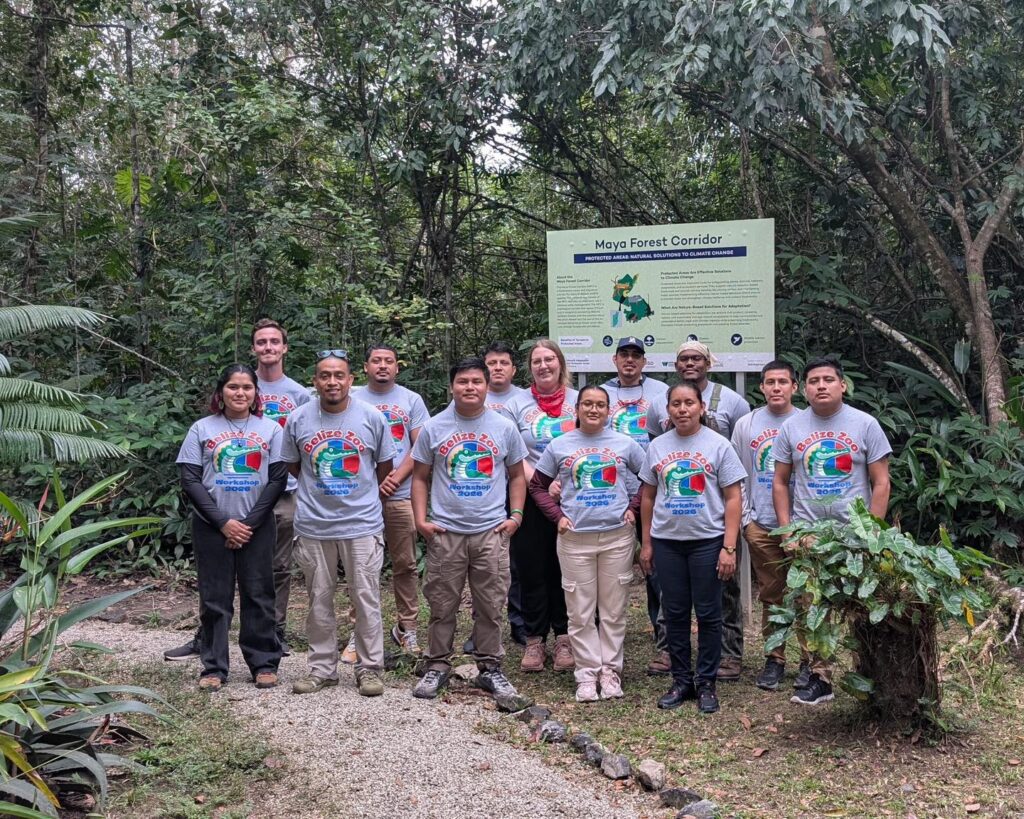
Creating Empathy for Wildlife Workshop
BY JAYC CANTUN
On January 27th and 28th, I attended the Creating Empathy for Wildlife Workshop which utilized the North American Association of Environmental Education Guidelines and was co-hosted by The Belize Zoo and Tropical Education Center and the Zoological Society of Milwaukee. I was one of 13 participants from NGOs across Belize and I was proud to represent BFREE. The workshop was a deeply engaging and thought-provoking experience that highlighted the critical role that environmental education plays in shaping attitudes, behaviors, and long-term conservation outcomes in Belize. Over the course of two days, we were guided through discussions that not only explored the foundations of environmental education but also challenged us to critically examine Belize’s approach to environmental education, its leadership, and long-term sustainability. The workshop emphasized that empathy for wildlife cannot exist in isolation, but it must be supported by a strong, inclusive and properly structured environmental education system.
Much of the workshop focused on building a shared understanding of environmental education and its purpose. The workshop emphasized that effective environmental education must be community centered, ensuring that the local knowledge, values and realities pertaining to the communities are respected and integrated into the project. This is particularly relevant in the Belizean context, where communities are closely tied to natural resources and biodiversity, and conservation efforts are most successful when people feel ownership and connection to it.
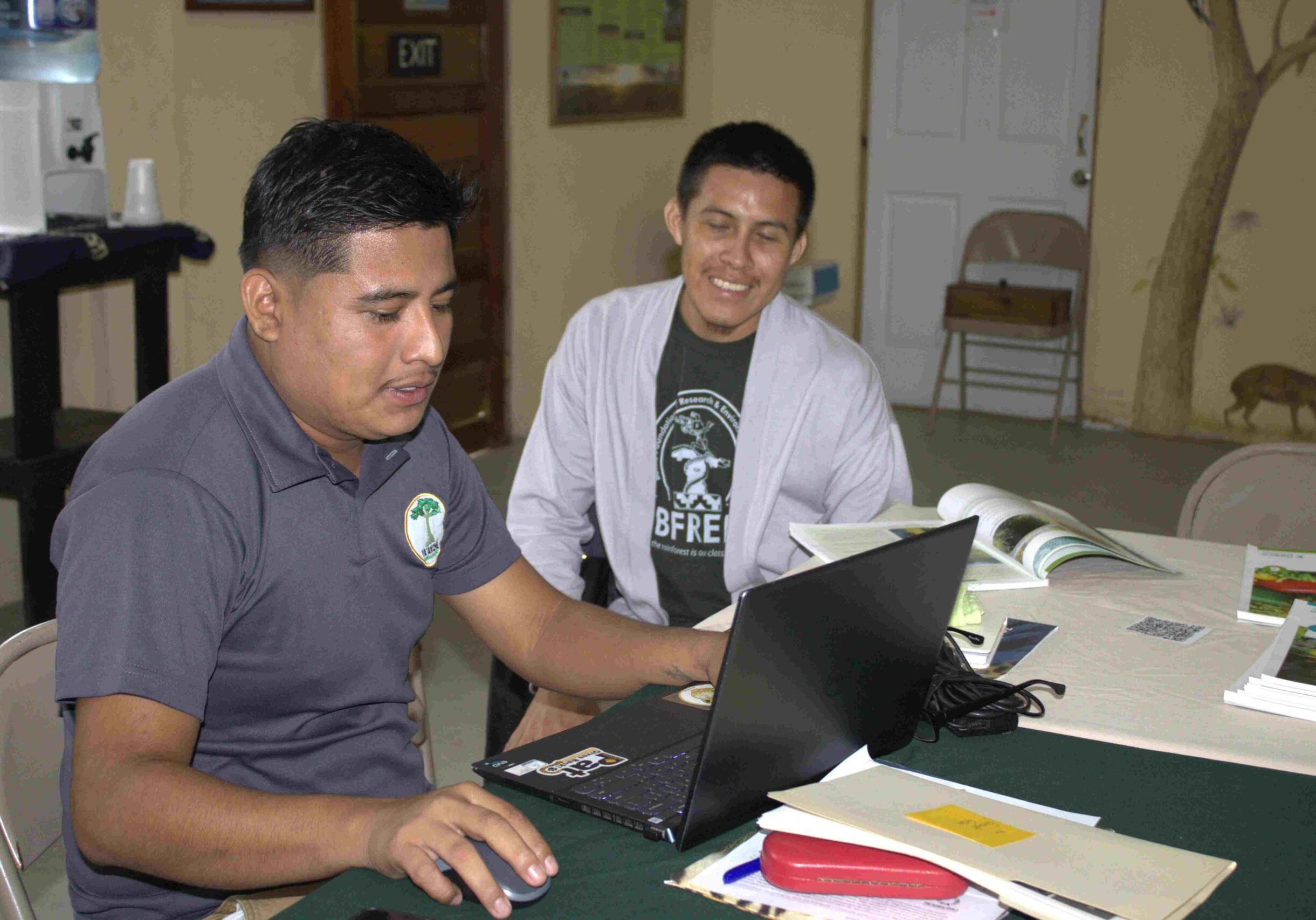
Jayc Cantun (left) collaborate with Ya'axche staff member during workshop.
The workshop also stressed that environmental education must be collaborative and inclusive, involving NGO’s, educators, community leaders and importantly key government institutions. This point resonated strongly as discussions progressed and it became clear that many organizations in Belize are doing meaningful work independently yet lack a unified structure to align goals and messaging for proper dissemination. The recommendation was that environmental education should be oriented toward capacity building and civic action.
Rather than simply transferring knowledge we might seek to empower individuals and communities to take informed action for environmental protection. Finally, we explored the concept of long-term investment and change, reinforcing that environmental education is not a quick short-term project but an ongoing process that requires sustained commitment, resources, and evaluation.
A particularly impactful moment on day one came when we were asked: who are the leaders of environmental education in Belize? This question sparked deep reflection and debate. This is where it was realized that there is no clearly defined or nationally recognized leadership body guiding these efforts. This realization became even more concerning when I recalled from my previous university experience of Belize’s constitution having no explicit reflection towards environmental education and there is no law or act that can reflect this strongly. The closest is the revised Wildlife Protection Act, which is more focused on controlling the amount of wildlife taken or when one can harvest wildlife and penalties those that do not abide by these rules face. This gap highlighted a systemic weakness and underscored the urgent need for a national environmental body that can ensure accurate, consistent, and culturally relevant information is disseminated to the Belizean populace.
The conversation naturally shifted toward the role of NGOs and how collaboration could improve the effectiveness of environmental education across the country. We all acknowledge that NGOs often work in silos, leading to duplication of efforts and inconsistent messaging. We discussed how we can improve communication, share resources, and coordinate strategies to improve and strengthen environmental education nationwide.
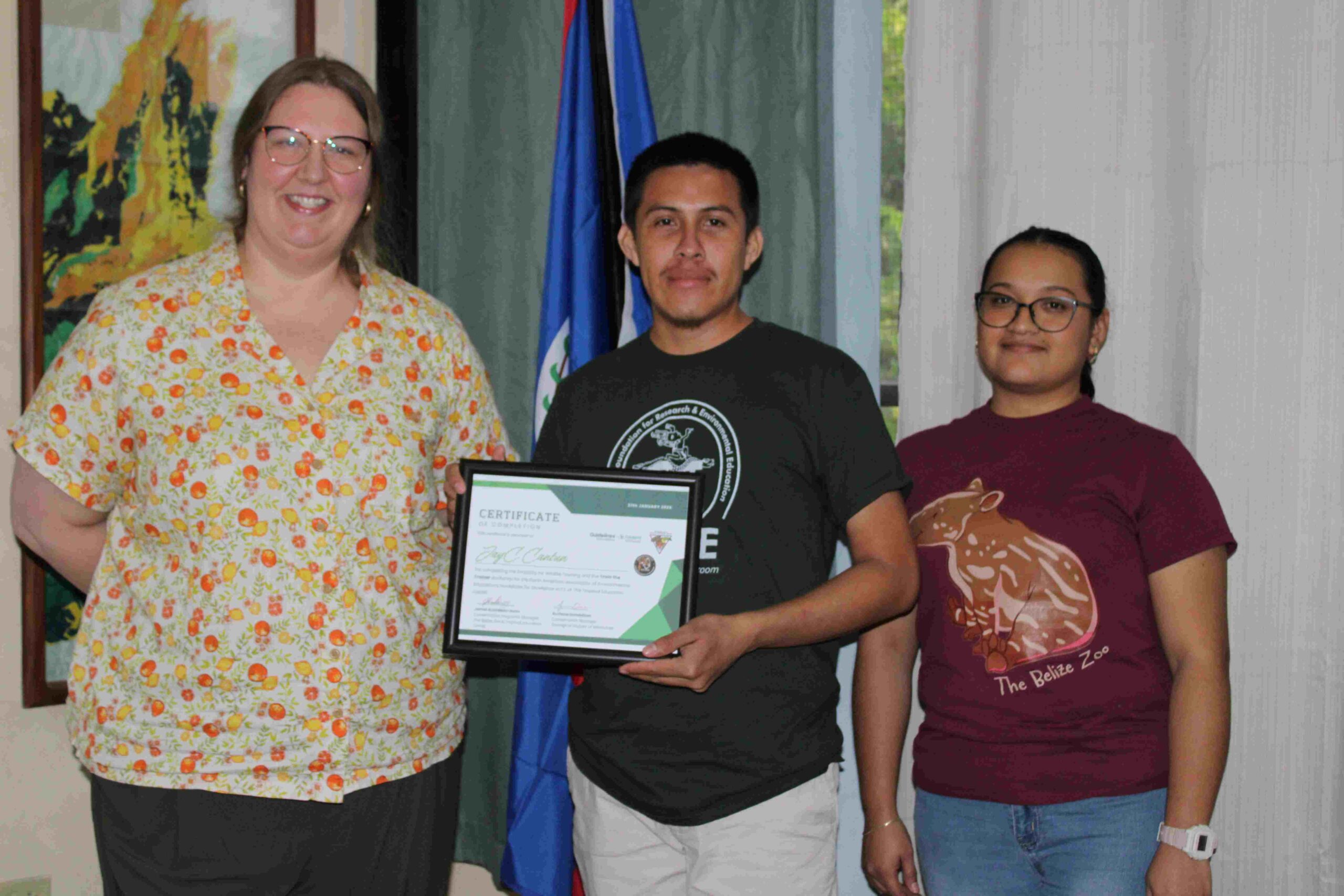
Jayc Cantun (middle) received a certificate of completion presented by representatives from the Zoological Society of Milwaukee and the Belize Zoo
The workshop was both enlightening and motivating. It reinforced that creating empathy for wildlife goes beyond emotional connection; it requires structured, inclusive, and collaborative environmental education systems. The discussions highlighted critical gaps but also revealed immense potential for improved growth through closer partnership and long-term commitment. This experience has deepened my understanding of the scope of environmental education’s role in conservation and a renewed commitment to supporting efforts that would strengthen environmental education in Belize.
Thank you to the Zoological Society of Milwaukee and the Belize Zoo for co-hosting this event. I am also grateful to have met education staff from other NGOs including Belize Wildlife and Referral Clinic, Belize Audubon Society, Friends for Conservation and Development, Monkey Bay Wildlife Sanctuary, Sarteneja Alliance for Conservation and Development, and Ya'axché Conservation Trust.
